Author: iamnotmakingup
One Wrong Note And—
by Barbara White
This essay is my submission for the Soaring Twenties Social Club’s Symposium. The STSC is a small, exclusive online speakeasy where a dauntless band of raconteurs, writers, artists, philosophers, flaneurs, musicians, idlers, and bohemians share ideas and companionship. Each month we create something around a set theme. This month, the theme was “risk.” Consider joining us.
***
0:00. On the soundtrack, applause. Then the orchestra tuning. On screen the gears of a machine are turning, with titles superimposed.
[I create a blank document. Will I be able to finish by the time the film ends? I have one hour, thirty minutes, and fifteen seconds to write.]
Tom Selznick enters the theater. Although he is a gifted concert pianist, he carries a canvas backpack like a high school student. Earlier on, he was disappointed that his plane did not crash, so leery he is of his upcoming performance.
Some things do not add up. For example, Tom has gone straight from the airport to the concert hall, changing into his tuxedo in the limousine. At the same time, across town, movers are picking up the piano at a cavernous, reverberant mansion reminiscent of Xanadu. (We will hear the name “Charles Foster Kane” in a few minutes.)
The piano arrives at the concert hall around the same time as Tom. There is a trio of “insurance guys” clustered around the instrument, but no sign of it being tuned.
Not only does the pianist not warm up; there is also no rehearsal with the orchestra. Tom is making a precarious comeback after a five-year sabbatical from performance, undertaken when he “choked” on “the unplayable piece” called La Cinquette. But he goes right from plane to piano without preparation. There is a long table of catered food, but no practice.
All of this is preposterous.
8:10. Tom’s wife, Emma, says to her friend, “It’s a classical concert, Ash. That means it’s better if Tom is not drunk.”
Ash has suggested they all go to a “pregame” happy hour. Poor, tacky Ash and her bumbling husband, Wayne, are the butt of some jokes here. They do not know how to behave at a classical concert! This will not end well. A cello bow and a jugular vein will be involved. And some disdainful looks and “shushes” from elite audience members.
But first, a stagehand approaches and hands Tom a folder, saying, “Sir, your chart.” Don’t these filmmakers know that classical musicians don’t say “chart”?! (Yes, they know.)
16:45. The conductor, Norman, tells Tom, “If you play a wrong note, they won’t know. They never do.”
More tuning from the orchestra, this time in the hall.
Norman—[his last name is unintelligible and I will not allow myself to rewind]—licks food from his fingers crudely before heading on stage in his tuxedo. Not what we expect from a prominent figure in the rarefied world of high art. Or is it?
Tom is backstage, looking terrified. It is almost time to meet his public.
Announcer (invisible, on speaker): “Ladies and gentlemen—”
Tom (to himself, backstage): “Shit!”
Announcer: “Tom Selznick.”
Tom is perched on a platform behind the orchestra. This is perversely unrealistic, but it has to be that way to accommodate the plot.
25:00. Tom sees a strange red arrow in his music. He turns the page and there is another marking:

He thinks it’s a prank played by mean-spirited musicians trying to spook him into another episode of stage fright—pettiness among musicians is something the film gets right—but no. Soon he will realize that the graffiti artist who defaced his music is training a red laser pointer on him.
28:00 Another marking in red on Tom’s music: “AT THE REST GO TO YOUR DRESSING ROOM.”
Tom is able to comply, thanks to the strange positioning of the piano behind the orchestra. As he leaves the stage, the audience gasps. Is it stage fright? Is he “choking” again? In the dressing room, Tom receives a text directing him to an earpiece. He inserts it, and the villain Clem explains that the red laser light comes from a “Rochester 47 semi-automatic.” If Tom makes even a single error in his performance, Emma will be shot. Clem is a cinematic panopticon: he can see and hear all that Tom does, while Tom can only reply through the earpiece.
41:52. Tom positions his phone behind a page of his music and texts Wayne through the paper.
How outlandish this scenario is! Talking between movements, cell phones ringing in the audience, a sniper talking through an earpiece, and even a pianist surreptitiously texting onstage. On a Blackberry! Through it all, the film repeatedly raises the ante, and poor Elijah Wood—I mean, Tom—remains wide-eyed and terrified. However, in between his brief excursions offstage choreographed by Clem, he continues to play the piano.
Later—[I have seen this movie before]—Clem will call Tom a “puppet.” But it’s not because he is bossing Tom around like a conductor or movie director or some other kind of tyrant. It’s because Tom only plays others’ music. “A genius puppet, but still a puppet.”
50:27. Intermission. (In, not of, the film.)
Somehow, so far, Tom has risen to the challenge and has played perfectly. It’s almost like the pressure is helpful.
[This reminds me of Edward W. Said’s essay, “Performance as an Extreme Occasion,” in Musical Elaborations, where he describes the musical performer as a figure exerting power over the audience. Maybe I can look that up if I have time before the film ends. In any case, Naomi Cumming had an intriguing response to this idea, recounting her experience as a young musician who was immobilized and unable to speak in the presence of her intimidating violin teacher. This is in her book The Sonic Self: Musical Subjectivity and Signification. She died so young, only 39!]
58:50. “Go to hell,” Tom tells Clem through his earpiece.
Again, maybe the agitation is helpful. As we will see, Tom will get even more indignant a bit later.
[I’d better get on to what I find most enchanting about this film before it ends. I’ve only got about thirty minutes left.]
Time is a despot. To perform live is to be imprisoned in duration. If things go awry, there is no remedy.
No edit. No rewind. No revision. No reset.
No chance of a second chance.
1:04:05. “Shut. The fuck. Up,” Tom says to Clem, as he plays the “impossible” La Cinquette.
As the film lampoons classical music conventions, it unfolds in real time, or something close to it. Tom talks, texts, exits, and enters again, and all the while, time passes inexorably. The music goes on, as it must, and Tom races back to his bench repeatedly, as he must. Even as he breaks all the taboos of classical music (talking while playing, tapping his fingers on the piano frame, swearing at a sniper), Tom cannot pause or backpedal. Clem, the shooter in his roost, is simply a more literal and audible—[if not visual—we don’t yet know the voice is John Cusack’s]—manifestation of the threat a musician may feel onstage. Clem even advises Tom to think of him as the voice in his head that torments him during performance.
The film itself, of course, is fixed. There is no danger. The right notes are already right, and the wrong notes are already wrong. It’s done. There can be no change.
It was about forty minutes ago that Clem threatened Tom, “PLAY ONE WRONG NOTE AND YOU DIE!”
Poor Tom, literally under the gun! But what about the actor, Elijah Wood? What might the director, Eugenio Mira, have said to him during shooting? Maybe something like this:
“PLAY ONE WRONG NOTE, AND . . . YOU . . . WILL HAVE TO . . . DO ANOTHER TAKE!”
1:18:10. Credits. The soundtrack is Doris Day in rehearsal, complete with an error. A canny reference for those who know too much.
[Made it! Just in time. Even a few minutes left to proofread. I didn’t specifically use the word “risk,” but I think the idea comes across.]
Yes, this was really written in real time—with a little post-production polishing. As Norman says, “they’ll never know.” The film is Grand Piano, directed by Eugenio Mira, 2013. Trailer can be found here.
Away
This piece is a contribution to the STSC Symposium, a monthly set-theme collaboration between STSC writers. The topic for this upcoming issue is “Home.”

“How long are you home for?”
The question comes from someone I have just met. It is only my second time on this remote rural island, and I am just getting my bearings, but she refers to “home” as if I have always lived here too. I am touched by her warmth, but it’s not really about me. To her, the place we are standing is the center, and everywhere else stands in relationship to it. To her, I am not “visiting”; I am not simply “here” in this spot. I am not “on a trip.” I am “home.”
At least, this is the impression I get. But I am new here, so perhaps I am making this up. I am “from away,” as people sometimes say.1 But here does feel like a center. It’s easy to envy people’s feeling of rootedness. Being here means being away from the fancy college town where I spend most of my time. I don’t miss it.
I would not say I am “home,” ever, really, whether I am talking about here or there or someplace I left behind in the past. I feel distant from this word and seldom use it. I can’t quite pronounce the words “at home” when I refer to the fancy college town. A statement as simple as “at home, the traffic is brutal,” or, “at home, we call it ‘the shore’,” feels like a misrepresentation. I usually stop myself before I say it, and instead I name the town or the state I live in, more generically and antiseptically. I do not claim these places as my own. They are more like GPS locations with user histories.
***
In an online session, a woman I admire affects the accent of the region where I grew up. She is playing around, saying something like “I am having a hahd time finding the pay-pah.” It is not clear why she is doing this all of a sudden.
It’s always unsettling to hear such a cartoonish rendition of these sounds. They have significance and history to me; they bring rich and painful memories. They may seem like a costume, available to anyone to put on for fun. But these sounds can also be torn off. Long ago, I lost my accent. When I moved away, people could not understand me. In response, I learned to speak “normally.” I still get confused saying “Marlborough” though.2
This accent is often imitated, badly. Impersonators are so obsessed with leaving out the “r” that they get the vowels all wrong.
This way of speaking has class associations, of the lower variety. Think Laura Linney in Mystic River.
Whether or not my friend means to emphasize this, I cringe when I hear the caricature, as if my schoolmates and cousins are being mocked.
***
Away again. On the island, they seem to delight in pronouncing the “r”—or more accurately, I delight in hearing what is ordinary to them. I linger in the garden, eating a lemon bar. I drink in all those consonants I missed growing up, and I hear them seeping into my own sentences. I wonder if it might sound like I am imitating someone else’s accent.
I call the island Brigadoon, after the magical town that seems to exist outside of time. But the thing is, real people live real lives here, every day—not just one day a century, and not for the consumption of an audience. This is not a movie.
I call the island The Land Without Latte, my tongue in my cheek, I insist. But then a café opens that does make latte, and I am disappointed. My scenery is smudged.
Back in the fancy college town, which is located in the most densely populated state, I can order sashimi or falafel, ma po tofu or tandoori chicken, kale salad or martini shrimp—or even a cheese steak from the place down the road that’s been there forever.
On the island, for amusement, I log into GrubHub, and the app reports, “Sorry, no results were found. We’ll notify you when restaurants become available in your area.”
However, on the last day of the season, a neighbor brings three lobsters, and as we are cooking them, someone else shows up and interrupts the lobsters with a bucket of crabs.
The island also offers pie made of moose, deep-fried pepperoni, and a sort of spiced meat sandwich, with condensed milk sauce, that somehow got here from Turkey. And oatcakes. There is something called “bed lunch,” which involves neither bed nor lunch—not in my understanding of those words, anyway.
It’s easy to wax poetic about the island, but I often think, the upside is that people have to rely on one another, and the downside is that people have to rely on one another.
Sometimes, to avoid getting carried away, I silently list of all the magical elements to myself and then make myself continue on to remember, “and then there is the occasional vigilante murder.” But I do not say that to anyone else, only to myself. It’s not my story to tell. Sensational, cute headlines by reporters from cities far away were rightly criticized for being crass. It’s not a movie, though it will be soon.3
Alienation is not sophistication. Not necessarily. Sometimes it is just alienation.
***
“I lived in New York!”
[Spoiler alert! This is much funnier onscreen; in fact, it is only funny onscreen. Please watch it!]
This is the character Britta on the satirical television show called Community, set in Greendale Community College in Colorado, boasting (again) about her (flimsy) Manhattan credentials. In a running gag, she repeatedly invokes a tenuous connection to the city to prove her worldliness.
But her naïveté is exposed yet again. When she brings in a baker’s dozen of what she calls “baggels,” her classmates object and correct, informing her that the word she means to say is pronounced “bagel.” Undeterred, she insists, “I lived in New York. I know what a baggel is.”
The satire is as intricate and knowing as anything performed Lincoln Center, made even more delicious by the legend that the show’s creator pronounced the word “baggel” himself, before he ever heard it spoken aloud.
Note the slipperiness of “lived in.” Not “I am from New York,” or “I spent x number of years in New York.” She grasps at a prestige that is not rightly hers.
In Sweet Home Alabama, Melanie does actually live in New York, where she has achieved great success. However, she has to return to the town where she grew up in order to take care of unfinished business. Often, female characters who go back where they came from—“home”?—are subjected to domestication or suffering: they need to be “corrected” somehow. One character has to regain the warm-heartedness she lost in the big city and stop wearing black all the time. Another comes home to fulfill a family obligation, which entails revisiting childhood trauma. Sometimes there is a twist, and the worlds get blurred, or the character solves a murder.
Roger Ebert is “tired of the premise” of Sweet Home Alabama. He asks, “Isn’t it time for the movies to reflect reality and show the Melanies of the world fleeing to New York as fast as they can?” The artifice of the rural, modest, unpretentious place—whatever the details of the plot—is ripe for revision:
The fact is that few people in Hollywood have voluntarily gone home again since William Faulkner fled to Mississippi. The screenwriters who retail the mirage of small towns are relieved to have escaped them. I await a movie where a New Yorker tries moving to a small town and finds that it just doesn’t reflect his warm-hearted big city values.4
Home, when rural or socioeconomically modest, brings up shame and cheap shoes. In The Silence of the Lambs, Hannibal Lecter luxuriates in calling his adversary, FBI Agent Clarice Starling, a “rube.” He’s superior, whether it’s due to being a psychiatrist or a murderer or both.
***
Here and there. Or vice versa.
“She divides her time between Hudson and New York.”
“He divides his time between New York and Los Angeles.”
Once, in a clothing store on the Upper West Side, I heard a customer say, “I’ll wear sleeveless upstate, but not in Manhattan.”
I never hear anyone say, “I divide my time between Youngstown and Cleveland.”
What does it mean to “divide time”? What else gets split up?
***
The island of Manhattan comprises about 23 square miles. My magical island of Brigadoon takes up about 17. They are of comparable size, geographically.
If I were to take the population of the rural island and multiply it by 1064, it would have the same population density as Manhattan.
There is more space here. But many people clear out, sometimes because they want to escape to Seventh Avenue, like Melanie. There is a long history, though, of going to the city, or all the way out West, in order to find work where it can be had. It seems that part of being home is feeling the absence of those who have left, and wondering whether one will need to go elsewhere in order to make a living. Knowing that the roots could be torn out at any time. Away is always here.
There are several local songs about departure. One of them, in the words of someone who has reluctantly left, ends, “Whenever a fiddler rosins a bow, my first and last thoughts are of home.” Whenever anyone sings this song, the crowd joins in and sings along in harmony. Most everyone knows the song and the real-life story it portrays. It is startling and moving to hear such groundedness and such community. I can’t hear this song without a tear, even though I only know the stories second-hand.5
***
There is a housing shortage on the island—in fact, throughout the region. It is a seller’s market for the first time anyone can remember, and prices rise suddenly, taking even modest properties out of reach. People are sleeping in tents. The weather turns cold. Experts say the province needs 50,000 additional units within the next eight years. Even those who have financial means are out of luck, because the inventory is so low.
Real estate listings used to be informal and minimal, geared toward the local population who know their way around the island. Now, glossy advertisements aim to entice buyers to relocate from faraway cities, touting the beauty of the landscape to those who are not used to shoveling or mowing or washing their own electric cars. Members of the laptop class have become accustomed to working remotely, and they want to keep doing so. They want to work even more remotely, way out here in Brigadoon.
(I am a member of the laptop class.)
***
What would it be like to be rooted in a place that was not defined by being away from another place?
What would it be like to end up where you started out, to stay put, even?
What would it be like to swim in experience, rather than discover it or compare it or escape to it? To stop feeling the distance between “here” and “there”?
***
In classical music theory, “home” is another word for “tonic.” It is also called the “center.” These terms all describe the sounds that are shaped to seem fundamental, stable, desirable, and satisfying. However, the idea of the “center” shifts from piece to piece and over the centuries. It is not one thing, not one place, and not always secure: challenges and subversion are part of the deal.
We can only know here if we know away. (In classical music, anyway. A lot of compelling music sticks around to explore home, or wanders without such a feeling of obligation to return to what is known.) Much—most—classical music begins “here,” on the tonic, only to move “away,” and then return “home.” But the ending is most crucial. In medieval plainchant, the “final,” the place where the devotional sung melody ends, gives the mode its identity, letting us know what other chants it claims as family. The ingredients alone are not enough; they need to be arranged through time and space in a way that we can place.
Later idioms of classical music, more likely to be secular, introduce more movement, manipulation, and individuation. The music knows that we know the arrival is coming. A composer teases the ear, wandering and interrupting and withholding the resolution. Tension and release drive toward completion, closure, and, ultimately, silence. Home is where the music goes to die.
***
Notes
- For the last ten years, I have heard that outsiders are referred to “Come From Away,” or even “CFA,” but it is only outsiders I have heard refer to outsiders that way. “From away” does come up. The phrase “Come From Away” is in use though, as evidenced by the 2013 musical of the same name, which concerns the unplanned stopovers of dozens of planes in Gander, Newfoundland in the wake of the September 11 attacks.
- MSNBC newscaster Lawrence O’Donnell reports that he grew up in Dorchester, Massachusetts. Every so often, he deliberately drops an “r,” such as when he refers to the name of former Boston Mayor “Marty Walsh.” For those of us from the area, it can feel pretentious or artificial not to pronounce certain words (names especially?) that way. On a few occasions I have heard O’Donnell’s accent emerge in a way that seems accidental. Interestingly, he has also referred to pronouncing words “wrong” in the past, although he was simply referring to delivering them in an accent.
- This involves a 2013 murder case that took place in the fishing community of Petit-de-Grat, Nova Scotia. In his 2020 posthumously published book, Blood in the Water: A True Story of Revenge in the Maritimes, Silver Donald Cameron addresses the ways in which the events were sensationalized and (my words) packaged for an audience. He writes: “The phrase ‘murder for lobster’ will stick to this case like a burr to sheepskin. It will be in headlines and stories all over the world.” (Silver Donald Cameron, Blood in the Water: A True Story of Revenge in the Maritimes, Viking/Penguin Canada, 2020). Sharon Montgomery-Dupe’s article in Saltwire discusses the sensitive issues raised by reporting on, researching, and writing about the case. In a sterling example of the Streisand Effect, this and other articles include the phrase “murder for lobster” even as they strive to combat the sensationalism.
- Roger Ebert, Review of “Sweet Home Alabama,” September 27, 2002.
- The song is “Heading for Halifax,” composed by Alistair MacDonald, probably in the 1970s.
I Sweat In Your Phone
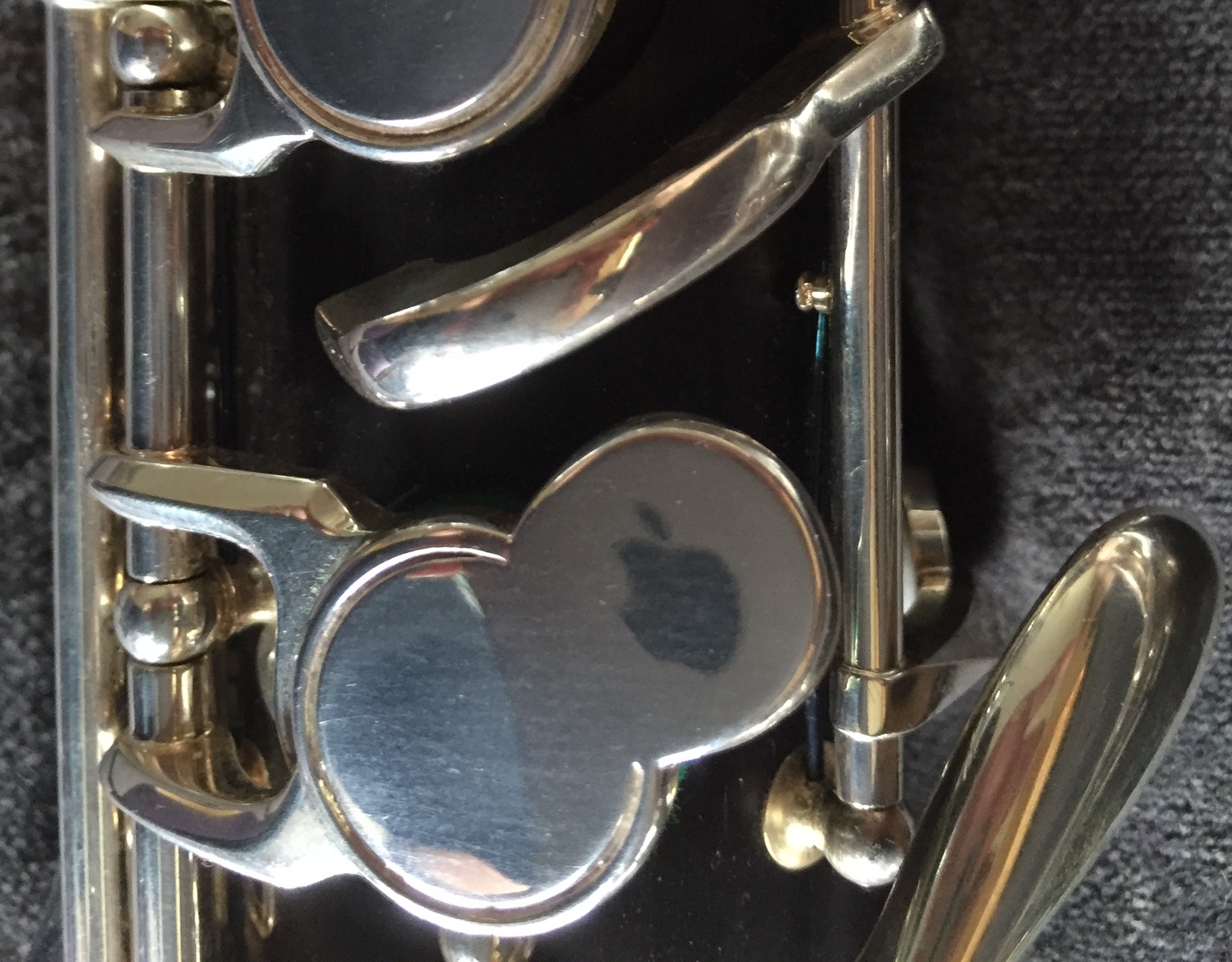 I know I look fetching with perspiration dripping down my face, eyeglasses sliding down my nose, abdomen puffing in and out like the bellows it is, and a four-foot wooden tube stuck in my mouth, which I lick with abandon to get the proper saliva quotient on a finicky piece of cane held in place by two miniature metal screws.
But as dashing as my fluid fingerwork looks in 1080p HD, the sound is kind of important too. Between the amplification, the reflective acoustic, the talkative crowd, and the recording quality of your phone . . . well, you get the picture.
Then there’s me. At 80ºF plus humidity, the lower register of my flute refuses to speak—that is, when it’s not sliding off my chin. Tuning is a pipe dream (no pun intended).
Have you tried focusing on the feet? They’re the most musical part of the body, anyway. Though they might distort your audio quality.
I am alternating between four different instruments, and thus can’t fully warm up any of them; I mean, they’re overly warm, but not warmed up. My licorice stick is thirty-two years old. That’s 150 in people years. This species of wood is depleted, so I try my best to keep her going with hospice care as long as I can. Even so, at any moment she could explode in a spasm of uncontrollable asyntactic modernist squeaks. Fasten your seat belts . . . and there she goes! I hope that did not make your ears bleed. Or break your iMicrophone.
Is there a clarinet doctor in the house? No? But there’s an expert leatherworker? Hmm, an interesting possibility, but I think I’ll wait.
Sinuses. Arthritis. Insomnia. Not enough coffee. Too much coffee. PMS. Plus a run-of-the-mill cluster of neuroses. And I left the beta blockers in my other case. Actually, I think they’re in your case. Are they good? Should I get some? I’ve always been afraid to try them.
I’m furious at my duo partner and am glaring at him. We had a fight on the way to the gig. Not true, but it could be. For some other person, that is. Not me. Meantime, I do not want to miss when he winks at me between jigs, or when his eyes widen in surprise at my choice to play Mixolydian when he expects Ionian. He needs to be undistracted, so he’ll notice when I bounce in my chair to urge him to go twice as fast, or twice as slow, to accommodate the state of my lungs. (See above about sinuses, coffee, neuroses, etc.)
It’s a gymnasium, festive. Free-range kids running around screaming with glee. Throngs line up and jostle one another to thrust their tips in our expectant guitar case. Was that you who left the jalapeño croissant? (I am not making this up.)
As you see, it takes devotion and complete concentration to deliver the level of performance that passersby will want to keep as a souvenir. When you aim your phone at me, my performance ceases to be worthy of capture. Even Benedict Cumberbatch agrees.
Take away my comfort in knowing that these moments are ephemeral, and I fly without a net.
So, while I am honored that you want to carry me off in your pocket,—very honored, believe me—I am not ready yet. I want to look and sound my best before we take that step.
See that stack of business cards over there? Take one, and come see me next time. I’d love that! How my haircut will hold up until then I can’t predict, but I’ll sound much better than I do in that .m4v, I promise. And maybe a little later, when I’m ready, you can take me home with you.
—Barbara White
Those, who?
Those who can, do.
Those who can’t, teach.
Those who care, do and teach and sit on committees.
Those who smear, defame.
Those who generalize, reduce.
Those who aphorize, trivialize.
Those who categorize, divide.
 I Am Not Making Up